01
Hazardous-area document boundary
Explosion proof pressure gauges must be selected against the project jurisdiction and site classification. Do not assume ATEX, IECEx or local approval from the product name alone. Zone 1 and Zone 2 classifications are used for gas and vapour hazard environments.
02
Application scope
Typical applications include upstream oil and gas wellhead and separator instrumentation, petrochemical reactor and pipeline monitoring, chemical plant hazardous area measurement, mining and offshore platform pressure monitoring.
03
Selection requirements
Specify the hazardous area zone classification, gas group, temperature class (T-class), connection thread, pressure range, mounting direction and the exact approval documents required by your project jurisdiction.
04
Gas group and temperature class explained
IEC 60079 divides flammable gases and vapors into gas groups: IIA (e.g. propane, typical in petrochemical plants), IIB (e.g. ethylene, common in chemical processing) and IIC (e.g. hydrogen, acetylene — the most ignition-sensitive group). Temperature class (T1–T6) defines the maximum surface temperature the equipment may reach; T4 (135 °C) and T6 (85 °C) are common requirements in hydrogen-related hazardous locations. Confirm the required marking and document package before ordering.
05
Liquid-filled and solid-front options for hazardous areas
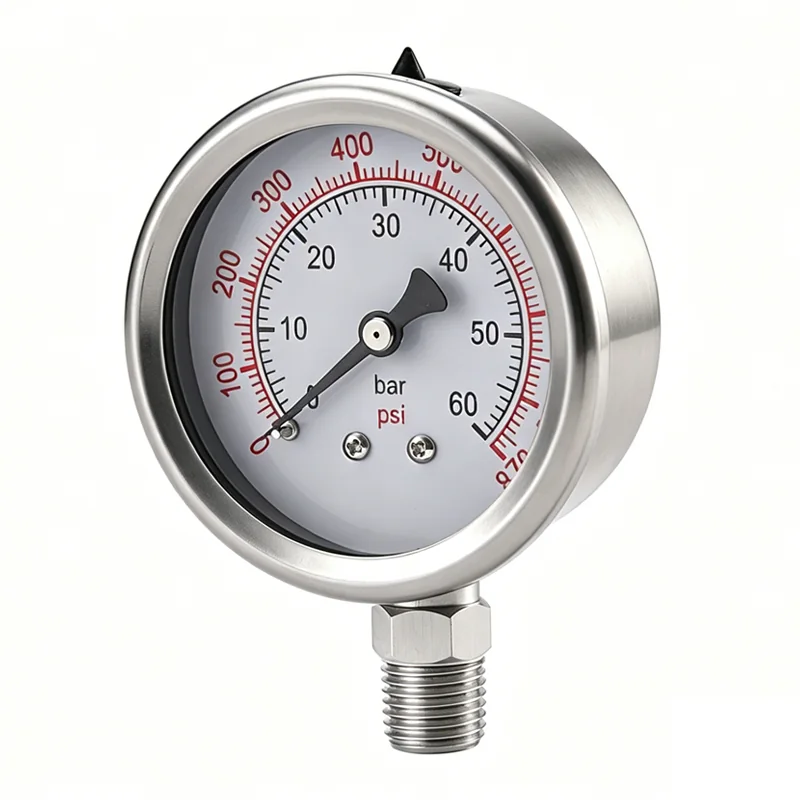
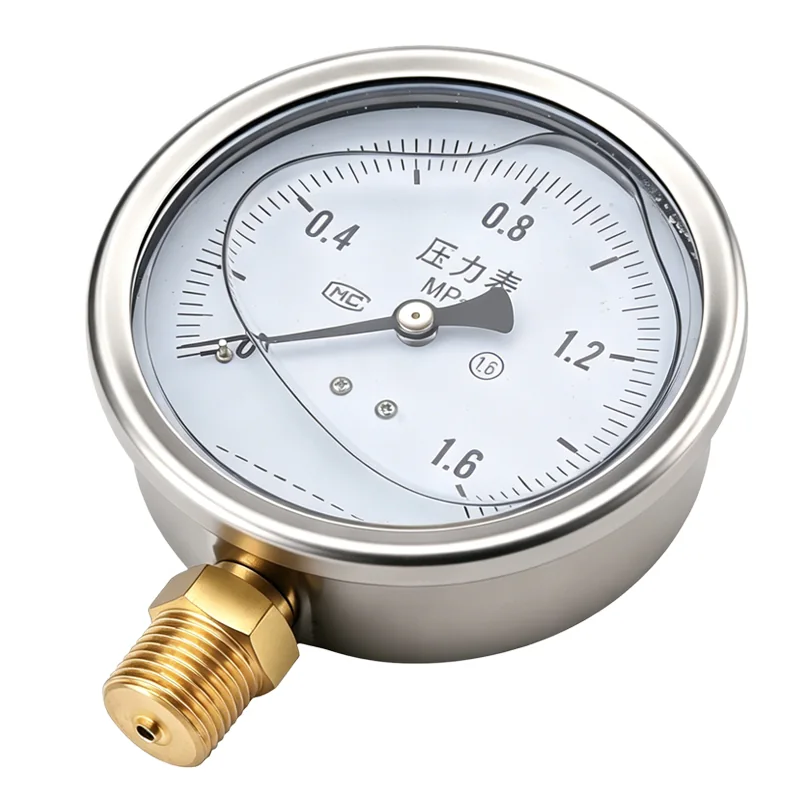
Explosion proof pressure gauges in vibration-prone environments benefit from glycerin or silicone liquid fill, which damps pointer oscillation and reduces wear on the movement. Solid-front safety cases are also available for installations where an over-range rupture could direct debris toward personnel. Specify both features in the RFQ if the application involves pulsating flow, cavitation, pump-generated vibration or personnel exposure near the gauge face.
06
Hazardous-area ordering boundary
Do not select an explosion proof pressure gauge from pressure range alone. The RFQ must include area classification, gas group, T-class, ambient temperature, medium temperature, connection, wetted material and required local approval or certificate package. Final suitability for Zone 1 or Zone 2 service should be confirmed by the project engineer or safety authority before procurement.